
 Marcus Vance
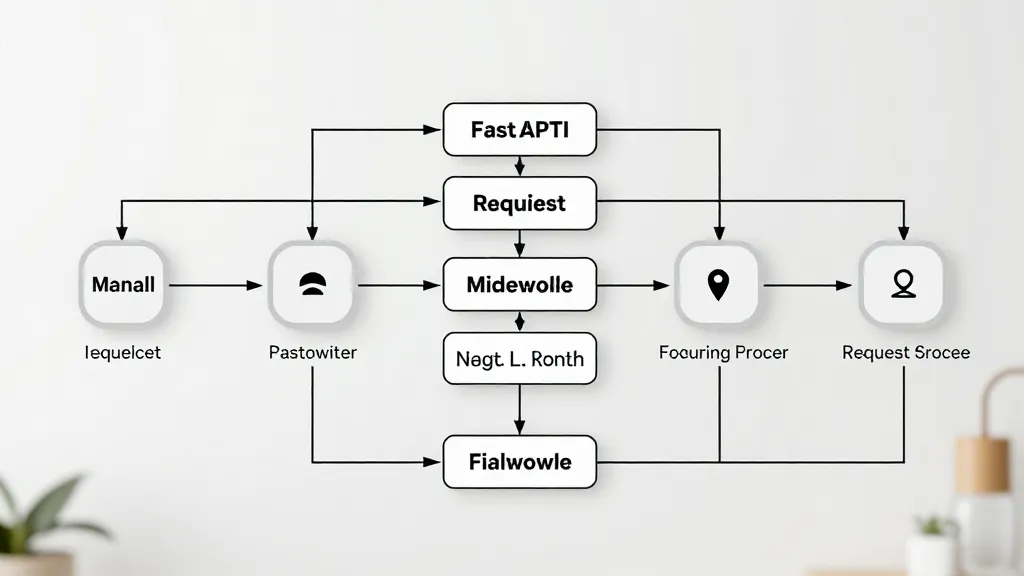
Understanding the fastapi middleware execution order is crucial for backend engineers and Python developers aiming to debug and optimize their applications. Middleware in FastAPI plays a vital role in handling requests and responses, but its effectiveness depends on how it’s structured within the request lifecycle. Misconfigured middleware can lead to unexpected behavior, making it essential to grasp the correct flow and order of execution.
This article explores how FastAPI middleware operates within the request lifecycle, highlighting the importance of sequence in processing requests. It explains the role of middleware in intercepting and modifying requests and responses, and how its order can impact the overall performance and functionality of an application.
We’ll also delve into Starlette’s `BaseHTTPMiddleware`, which serves as a foundation for custom middleware implementations. Additionally, the article provides practical examples of middleware order and state management, helping developers make informed decisions when building and maintaining FastAPI applications.
What Is FastAPI Middleware and Its Role
FastAPI middleware is a powerful tool that allows developers to handle cross-cutting concerns such as logging, authentication, and request validation. By running before and after request processing, middleware can modify or inspect requests and responses, making it essential for debugging and optimizing FastAPI applications.
Middleware Basics in FastAPI
Middleware in FastAPI is implemented as a class that defines `__call__` or `await __call__` methods. These methods are executed during the request lifecycle, enabling developers to intercept and modify requests and responses. The `add_middleware()` method is used to register middleware, allowing it to be part of the application's processing pipeline.
How Middleware Affects Request Lifecycle
The execution order of middleware is crucial for controlling the flow of data and processing within an application. Middleware is executed in the order it is added, meaning that the first middleware in the list runs first, followed by the next, and so on. This sequence determines how data is transformed and how requests are handled across different parts of the application.
How FastAPI Middleware Executes in Order
Understanding the execution order of FastAPI middleware is crucial for managing how requests are processed through your application. The sequence in which middleware is added directly affects the flow of data and logic, making it essential to structure your middleware correctly.
Middleware Execution Flow Overview
FastAPI middleware is executed in the order it is added to the application. Each middleware function receives the `request` object and a `call_next()` function, which allows it to pass the request to the next middleware or route handler. This linear flow ensures that each middleware has a defined place in the request lifecycle, from incoming HTTP requests to outgoing responses.
Impact of Order on Request Processing
The order of middleware execution significantly influences how different components interact. For example, authentication middleware should typically run before route handlers to ensure that only authorized requests proceed. Conversely, logging middleware may be placed later to capture detailed request and response data after processing. Misordering can lead to issues such as missing request data or incorrect authentication checks, which can compromise the functionality and security of your application.
Starlette BaseHTTPMiddleware and Its Role
Starlette’s `BaseHTTPMiddleware` is the foundation for FastAPI middleware, allowing custom logic to be injected into the request-response cycle. It provides access to the request object and the ability to modify responses before they reach the user. Using `BaseHTTPMERCHANTABILITY` ensures compatibility with Starlette’s internal request handling mechanisms, making it the recommended approach for defining middleware that needs deep access to request and response objects.
BaseHTTPMiddleware Overview
The `BaseHTTPMiddleware` class serves as the base for all middleware in Starlette and FastAPI. It allows developers to define custom logic that runs for every request, enabling tasks such as authentication, logging, or request modification. This middleware is designed to work seamlessly with Starlette’s asynchronous request handling, ensuring that it integrates smoothly with the broader framework. By extending `BaseHTTPMiddleware`, developers can access the request object and modify responses before they are sent back to the client.
Implementing Custom Middleware with BaseHTTPMiddleware
Implementing custom middleware with `BaseHTTPMiddleware` involves creating a class that inherits from it and defining the `__call__` method. This method receives the request and response objects, allowing developers to perform operations such as modifying headers, adding logging, or altering the response content. The middleware is then added to the FastAPI application using the `add_middleware` method, ensuring it executes at the appropriate stage in the request lifecycle. This approach provides fine-grained control over the middleware behavior, making it ideal for complex applications that require deep integration with the request-response cycle.
Managing Request State Across Middleware
Managing request state in FastAPI is essential for maintaining context across middleware and route handlers. By leveraging the `request.state` dictionary, developers can store and access data throughout the application lifecycle, enabling features like user authentication and request tracing. Understanding how to use this mechanism effectively ensures data consistency and improves application performance.
Storing Request State in FastAPI
The `request.state` dictionary in FastAPI allows middleware and route handlers to share data seamlessly. This feature is particularly useful for storing session-specific information, such as user IDs, authentication tokens, or request metadata. Since this dictionary is accessible across middleware layers and route handlers, it provides a centralized way to pass information without relying on external storage or global variables.
Middleware can modify or add entries to `request.state` during the request processing pipeline. For example, an authentication middleware might store a user's token in `request.state`, which can then be accessed by other middleware or route handlers for authorization checks. This ensures that data remains consistent and available throughout the application's lifecycle.
Best Practices for Request State Management
While `request.state` offers flexibility, it is important to manage state carefully to avoid memory leaks or unintended side effects. Developers should ensure that data stored in `request.state` is cleaned up after the request is processed to prevent memory bloat. This can be achieved by removing entries from the dictionary once they are no longer needed, especially for objects that may retain references to other resources.
Best practices for request state management include limiting the amount of data stored, using immutable data types where possible, and avoiding complex objects in `request.state`. Additionally, developers should be mindful of the scope and lifetime of the data, ensuring that it is only used where necessary. Proper state management contributes to the reliability and maintainability of FastAPI applications.
Practical Examples of Middleware Order and State
Practical examples demonstrate how middleware execution order and state management can be applied to real-world scenarios. By strategically placing middleware, developers can ensure that critical operations like authentication, logging, and request modification are handled efficiently and effectively.
- Authentication middleware should be placed before access control to ensure users are validated before checking permissions.
- Logging middleware is typically positioned early in the middleware stack to capture detailed request information before processing begins.
- Request modification middleware can be inserted at strategic points to alter the request or response across the entire lifecycle.
- State management middleware helps maintain and pass data through the middleware chain, ensuring consistency across different stages of request processing.
Example: Authentication and Access Control
In an authentication and access control example, the authentication middleware is placed first to verify user credentials. Once authenticated, the request proceeds to access control middleware, which checks the user's permissions against the requested resource. This order ensures that only authorized users can access specific endpoints, and any unauthorized attempts are blocked early in the process.
Example: Logging and Request State
Logging middleware is often placed early in the execution order to capture essential request details such as headers, query parameters, and timestamps. This allows developers to track and debug requests from the moment they are received. Combining logging with state management ensures that logged data includes relevant context, such as user IDs or request IDs, which can be used for troubleshooting and analytics.
Frequently Asked Questions
How can I ensure my middleware runs before a route handler?
To ensure middleware runs before a route handler, add it to the app using app.middleware() or app.add_middleware(). Middleware added earlier in the list executes first.
Can I access the request object in middleware after the route handler?
No, the request object is not available after the route handler completes. Middleware runs before the route handler, and the response is sent after the handler completes.
What happens if I add middleware in the wrong order?
Middleware added later in the list runs after earlier middleware. This can affect processing, such as authentication failing if a middleware modifies the request after it's already been processed.
How do I share data between middleware and route handlers?
Use the request.state attribute to store and access data. This allows middleware to pass information to route handlers and other middleware.
Final Thoughts
Understanding FastAPI middleware execution order is crucial for building robust applications. Middleware must be added in the correct sequence to ensure proper request handling and state management.
Apply best practices for middleware organization and state handling to improve application performance and maintainability. Start by implementing a structured middleware setup and refine it based on your application's needs.